
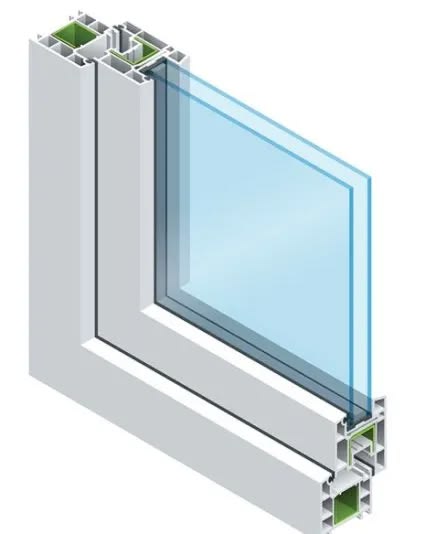
Standard Double Glazing
Standard double glazing is a system consisting of two layers of glass separated by a certain distance. This distance is usually filled with air or noble gases (argon or krypton) and sealed by a metal or polymer spacer.
Structure and Features
- Glass Thickness: Usually between 3 and 12 mm, depending on the application, ordinary, laminated or tempered glass is used.
- Spacer: Keeps the edges of the glass apart and its standard thickness is 6 to 20 mm. Its materials must have low thermal conductivity to avoid thermal bridging and often contain moisture absorbers.
- Filling the space between the panes: Air or noble gases such as argon and krypton are used to improve thermal insulation.
- Sealing: The edges are completely sealed and usually include a primary sealant (butyl or polysulfide) and a secondary sealant (silicone or polyurethane).
- Low-emissivity coatings: Thin transparent metal layers on the glass to reflect thermal energy and reduce heat loss or excessive solar heat gain.
Advantages of double-glazed glass
- Excellent thermal insulation: Reduces heat loss in winter and heat gain in summer.
- Sound insulation: Reduces sound transmission External.
- Reduced condensation (condensation): warmer interior surface and reduced possibility of water vapor formation.
- More comfort: maintaining a more favorable temperature in interior spaces.
- Reduced glare: using tinted glass or special coatings.
Standard double-glazed glass, with precision in glass thickness, spacer, gas type and sealing quality, offers excellent performance in thermal and acoustic insulation and is an ideal choice for modern buildings.


